
The meeting started past 11 a.m. on Friday and ended at about 12:50 pm the same day.
The two men were expected to discuss the minister’s memo to the president accusing the head of the Nigerian National Petroleum Corporation, Maikanti Baru, of corruption.

Asked by several journalists what they discussed, Mr. Kachikwu simply said “no comment” before hurrying out.
This has left people wondering what could have happened during the course of the meeting, all fingers crossed one or the other we will find out.
NNPC Scandal: Hear what Kachikwu said after meeting with Buhari

In the new study, published in the journal Veterinary Record, researchers surveyed 238 owners of dogs or cats. Half of the animals were healthy, and half had a chronic or terminal illness. Pet owners were asked to fill out an online survey about how taking care of a pet affects them.
Owners of sick animals reported a significantly higher caregiver burden—a condition people encounter when they’re providing informal care for a sick family member—than those with healthy pets. Sick-pet owners also reported higher stress, anxiety, symptoms of clinical depression and a lower quality of life than owners of healthy pets, and all of these measures were closely linked to the caregiving burden.
Depression was an especially pronounced problem for these pet owners. Depressive symptoms were even worse for people who belonged to pet disease social media groups, which the researchers say could indicate the members were seeking support for their distress.
The people in the study were mostly white, female, highly educated and in a relatively high socioeconomic class, and the results could be skewed just because those who filled out the online survey may have chosen to do so because they were interested in their relationship with their animal. More research is needed to explore how different groups of people interact with their pets. The researchers note, however, that this group may be representative of people who would choose to keep an animal with a chronic or terminal disease despite the emotional and financial costs.
This is one of the first studies to look at whether owners of sick pets experience caregiver burden, and more research is needed. But in the meantime, the researchers say their findings can help veterinarians respond to clients whose animals have serious diseases. If veterinarians understand the burden their clients with sick pets are feeling, they may have a better appreciation for their perspective, the researchers write, and this may enhance empathy and communication.
The researchers recommend that further studies explore potential ways to reduce the caregiver burden in pet owners—including some that work in human relationships, such as problem-solving training and taking breaks from caregiving. If veterinarians and their clients are aware of this burden and can talk about possible solutions, the researchers say it could help the health of people caring for ill pets.
People With Sick Pets Have More Anxiety and Depression

The image was tagged: Hare, Evil, Snowball, Film Character, Pets, Funny, Cute. Archives in the category "Animals", it was shoot by Nikon D7200 camera with shoot mode: 85.0mm · ƒ/8.0 · 10/5000s · ISO 140, gives a photo excellent quality. The maximum size is 5756×3637 pixels, you can download it with JPEG format.
License to use Creative Commons Zero - CC0. You are free to use for many purposes without worrying issues licenses because this image is TRUE FREE. We just want you to back a referral link to Max Pixel (optional).
You can also exhort them by inviting our photographers one cup of Coffee. If it is so great, please share with your friends.
Our AI system selective and propose some photos related. Hope you like it.
 Rabbits, Bunnies, Animal, Cute, Tree, Cherry Tree
 Bunny, Hare, Rabbit, Gray, Grey, Cartoon, Comic, Cute
 Animal, Hare, Hare Window, Gold
 Spider, Legs, Long Legs, Nature, Evil, Horror
 Skull, Skull And Crossbones, Skeleton, Bone, Smile
 Easter, Hare, Easter Bunny
 Hare, White, Funny, Smartphone, Samsung
 Hare, Easter, Abstract, Background, Funny, Texture
 Deco, Hare, Easter Bunny, Decoration, Nature Sounds
 Hare, Evil, Snowball, Film Character, Pets, Funny, Cute
 Hare, Evil, Snowball, Film Character, Pets, Funny, Cute
 Hare, Evil, Snowball, Film Character, Pets, Funny, Cute
Hare Funny Snowball Film Character Cute Pets Evil

It’s common knowledge that staying healthy means regular exercise, a balanced and nutritional diet and proper self-care and hygiene.
However, there are other things that people do to keep (or get) themselves in top form for summer. One important aspect of health that people tend to overlook during the summer months is proper nutrition. A balanced diet of vegetables, fruits, grains and lean proteins is one way to get most of the nutrients that you need. But even the best diets often lack certain nutrients.
As the days grow longer, the sun hotter and the hours spent outside more plentiful, it’s important to know which supplements to take to keep your body functioning in the heat. A study published by the U.S. National Library of Medicine found that vitamin C and vitamin E supplements can help protect skin against harmful ultraviolet radiation. This means less DNA damage, fewer sunburns and decreased risk of skin cancer. However, to reap the shielding benefits of these vitamins, these supplements must be taken together. Only taking vitamin C can increase immune function, and vitamin E on its own is an antioxidant that takes out potentially damaging free radicals. But if you want to enjoy the anti-ultraviolet effects of these supplements, it’s critical to take them both.
Even if you decide not to take vitamin E, vitamin C also has many health benefits apart from helping protect skin from sunlight. An article on theUniversity of Berkeley California’s website explains how vitamin C can decrease inflammation, leading to a decreased risk of many diseases, such as heart disease, Alzheimer’s disease and even some cancers.
Vitamin C can also aid with weight loss. A study posted on the U.S. National Library of Medicine’s website explains that taking vitamin C supplements can encourage weight loss through exercise. However, without exercise, it is unlikely that taking vitamin C will do all that much to help anyone lose weight.
Although vitamin C seems to be the most renowned immune-support vitamin, vitamin A can also help boost immune function. In addition to that,Organic Facts’ website suggests that consuming a small amount of vitamin A improves daylight and nighttime eyesight, slows the natural aging process of skin and can even decrease or prevent acne. Since many people are regularly exposed to the aging forces of sunlight during the summer, which can also damage eyesight (especially if a person looks right at the sun), these are welcome health benefits. As the heat rolls in and short sleeves (or no sleeves), shorts and swim suits come into style, taking a vitamin that actively improves skin health and decreases acne is another plus.
However, there is a warning that comes with excessive vitamin A consumption. Apparently, taking too much of this vitamin can lead to issues such as blurred vision, nausea or even an enlarged liver. Like all the vitamins mentioned here, taking too much can be just as dangerous (if not more so) than not taking enough.
Vitamin D is another critical nutrient that everyone should be taking; well, everyone who isn’t in regularly exposed to direct sunlight year-round, that is. According to an article on Health U.S. News, a fair-skinned person wearing very little clothing only needs to spend ten minutes in the sun every day during the hot summer months for their body to produce enough vitamin D. But for people with darker skin, as well as older people (who don’t produce as much vitamin D naturally), taking a supplement is critical.

Vitamin D deficiency has been linked to several major health risks. One of the biggest is multiple sclerosis. Decreased amounts of vitamin D in the bloodstream have been linked to increased risk for MS in individuals, according to the National Multiple Sclerosis Society.
Another consideration is the skin cancer risk of exposure to direct sunlight. While a little bit of sun exposure can be good for many individuals, direct exposure to ultraviolet radiation—which is needed to stimulate vitamin D production in the human body—every day of the year for ten or more minutes a day is too much. So, even for people with year-round access to direct sunlight and skin fair enough to absorb plenty of ultraviolet radiation, it makes more sense to take a vitamin D pill than to risk too much direct exposure. There’s no point upping your risk for skin cancer when vitamin D supplements are readily available.
Vitamins aside, anyone who plans to spend their summer in action should remember to drink plenty of water. Without water, vitamins can’t be absorbed properly. If a person is dehydrated, no number of supplements can stave off the inevitable headaches, weakness, nausea and even heatstroke that drinking too little brings. Drinking plenty of water is an incredibly important part of any supplement or diet program. If you’re not drinking enough, there’s no point throwing supplements at your problems.
For anyone trying to gain muscle weight over the summer, it’s also important to make sure that your supplement program includes plenty of protein. Protein comes in many forms, but if you’re tired of eating fish and chicken at every meal, there are whey and protein shakes, powders and bars that can provide avid weightlifters and athletes with the protein that they need. Beware, however, of the many protein supplements with very high sugar contents. These supplements can do more harm than good.
Another thing to look out for when eating lots of protein is not to consume an excessive amount. If you’re not exercising hard for an hour or more every day, then you probably shouldn’t be drinking a protein shake every day. There are many stories of people buying protein supplements and eating them without exercising in the hopes of magically gaining muscles. This isn’t how it works. The people who did this gained plenty of weight, but their muscles didn’t grow at all.
Of course, before taking any supplements, even natural ones, it’s best to check in with your doctor. Remember to take everything in even moderation. Don’t take too much of any supplement, follow the warnings and instructions on the supplement bottles and never expect vitamins and supplements to act as a medicine or cure for any disease or ailment. Also, don’t think that supplements can replace regular exercise and a healthy diet. If you take all your supplements but never work out or eat well, there’s no point. Fitness is a balancing act. Take the right supplements for summer, but don’t forget to get off the couch and run around occasionally.
And while vitamin C, vitamin E and vitamin A might be good for skin health, they are in no way intended to act as a replacement for sunscreen. For full protection against the sun, supplements and sunscreen are the best way to go.
SUN’S OUT, SUPPLEMENTS OUT

Despite easy access to online dating apps, even millennials prefer the traditional method of meeting their dates.
In an Abodo survey of 4,000 college students, only 4 percent claimed to use online dating apps for arranging dates. In fact, the primary purpose, for both female and male users, of online dating apps, was for entertainment purposes rather than serious quests for soulmates or hook-ups.
Interestingly, 11.6 percent of the females surveyed said they use online dating apps as a way of finding love, while only 4.4 percent admitted they use it to hook up. On the other hand, 14.8 percent of males prefer online dating apps for hook-ups, in contrast to 11.3 percent that use the apps to find long-term love.
Despite the survey’s findings, entertainment is the number one goal for the majority of online dating-app users, regardless of gender. Of course, one must then ask whether or not online dating is really changing the dating game.

While it certainly plays a role, it’s clear that traditional dating has not yet been surpassed. This is not surprising; after all, on many of these apps, it’s fairly easy to set up a fake account with fake images. Even real people may utilize fake pictures of themselves, or exceptionally flattering pictures that do not accurately represent them.
This is a concern that Heat Street addressed in 2016, noting a rise in Tinderscams was causing many users to flee, while creating a new feeding ground for scam artists. Others blame dating apps for causing an increase in sex addiction and making hooking up too easy, like ordering pizza or an Uber.
But, Abodo’s study seems to conflict, showing that 31.5 percent of female responders said “no way” to hooking up after the first date, while only 9.4 percent of men responded the same way. These dating apps fail, though, because they base matching users on their appearances. On Tinder, especially, an individual is reduced to how they look, allowing a user to swipe either left or right.
I will not say that people don’t use looks as a basis for seeking partners or dates, but in a society where body-shaming is common, it isn’t a healthy attitude to encourage. A person is more than their appearance, and there are many other aspects to consider when choosing a date, including personality, interests and manners.
Unfortunately, these are not qualities that dating apps can accurately manage. While Tinder does try to match you with people who have similar interests, you can’t learn much about their personality until you have interacted with them, which is something that can’t happen until you both “swipe right” on each other.
Tinder is not the only dating app out there, although it is the most heavily used. But, many other problems exist with other apps, some of which have an even worse problem with fake accounts, as well as a large number of users facing sexual harassment.
Roughly 35.5 percent of female users said they have been harassed on dating apps, while 14.1 percent of male users answered the same. And of the dating apps used, the highest percentage of harassed users came from Grindr.

Since love and hook-ups are not the number one reason for online dating, what is? Entertainment seems to be the winning reason, with many Abodo survey respondents claiming to use these apps because they were bored and looking to pass time.
With the invention of the smartphone, with quick and easy access to the profiles of other singles, you’d think that online dating would spread like wildlife. Yet, though such apps are popular, they are not as widely used for the reasons you’d expect. At end of the day, the classic dinner and movie still come out on top.
This also raises some interesting societal questions about how, as a society, one addresses relationships and values others. Are people worth no more than a single second of time? Can people be defined by a single photograph, and should the swipe of a finger decide one’s charm? This may be convenient, but it’s overly simplistic and oftentimes, can be divorced from reality.
Meeting complex people with interesting personalities should be part of the dating experience, and in a world where peoples’ eyes are already glued to their phones, the last thing society needs is another app that encourages people to remain immersed in the world of the phone.
A NEW SURVEY SHOWS THAT HOW STUDENTS USE DATING APPS IS CHANGING
Special Report: The demonization of Russian President Putin and Russia, in general, has reached alarming levels in the West with a new “group think” taking hold that ignores Russian realities and interests, writes Natylie Baldwin.
By Natylie Baldwin
In February, the Obama administration announced that it was quadrupling funding for a major increase in NATO troops and weaponry in the countries of Eastern Europe on the border with Russia. Diplomatic relations have faltered between the two countries over Syria.
And the corporate media in the U.S. and U.K. have again stepped up their demonization of all things Vladimir Putin – he’s corrupt, he personally orders hits on people, is facilitating war crimes in Aleppo, and wants to invade Europe. The media also pushes the idea that Russia is an uncivilized and backwards cesspit.
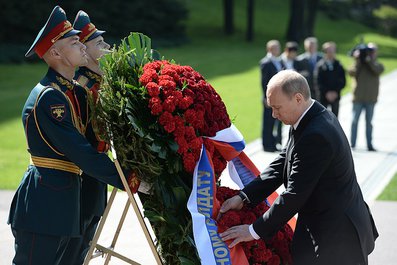
Russian President Vladimir Putin laying a wreath at Russia’s Tomb of the Unknown Soldier on May 8, 2014, as part of the observance of the World War II Victory over Germany.
Considering that Russia is a nuclear superpower, the largest country geographically in the world, and is the sixth largest economy in terms of purchasing power parity (and projectedto be number six in 2021 in terms of GDP), the U.S. relationship with Russia is one of the most important and delicate.
In order to have any chance of conducting this relationship in a rational manner, an accurate and nuanced understanding of the country itself and the history of post-Soviet U.S.-Russia relations is essential. This requires cutting through the misinformation and distortion that saturates much of our mainstream news and political discourse.
It’s important to keep in mind that Russia has a 1,000-year history of authoritarian rule and only started its climb out in the late 1980s. It is a transitional society, with elements of both authoritarianism and democracy. Putin, along with Dmitri Medvedev and Mikhail Gorbachev, is the least authoritarian leader that Russia has ever had.
Considering that the U.S. has supposedly been an established democracy for over 200 years, we Americans should consider a few significant problems we still have in order to gain some perspective. Only 55 years ago, African-Americans could not vote and could even be murdered with impunity in many parts of the country.
Today, we have an epidemic of militarized police officers who are shooting first and asking questions later; more and more people on death row are turning out to be innocent; rising inequality threatens our stability; and, a system of deep corruption in terms of campaign financing has compromised our democracy – corruption that is so profound that two political science academics have recently quantified the ways in which we are now officially an oligarchy.
Is this any better than Russia’s corruption because it has been folded into our legal system? We certainly have our own “oligarchs” in the form of the Koch brothers, Bill Gates, and the Walton family. Perhaps we can concede that it’s not very useful to beat on Russia for not being Switzerland after only 25 years.
Russian Sentiment
A recent poll by the independent Levada Center revealed that 66 percent of Russians feel free and 68 percent don’t believe it is likely that Russia will revert back to dictatorship. To understand why Russians may see themselves as fairly free, it is important to understand not only their history of authoritarian rule but also some facts and observations about Russia that run counter to the narrative often presented in our mainstream corporate media, which is owned by those same oligarchs that have captured our political system.

St. Basil’s Cathedral, Red Square, Moscow
(Photo by Natylie S. Baldwin)
(Photo by Natylie S. Baldwin)
When I visited Russia last autumn, one of the first things I observed was that the police in both Moscow and St. Petersburg did not carry guns, only batons. I asked some Russians about this and was told that if an officer had a special assignment, he/she might carry a gun but that generally they did not. This is not consistent with the characterization that most Americans have about Russia being a police state or autocracy.
Speaking of guns, Russian citizens have to abide by much stricter gun control laws than in the U.S. These include the requirement for gun owners to obtain a five-year renewable license. Before the first license is issued, attendance in a firearms safety class and the passing of a federal safety exam is required as well as a background check.
One example of how the Russian gun control laws have helped to prevent the deadly types of mass shootings seen in the U.S. is the hate crime against patrons of a gay club in Yekaterinburg that occurred shortly after the Orlando massacre. Due to the fact that Russians don’t easily have access to (illegal) assault weapons, no deaths occurred as a consequence of the violence perpetrated against the patrons by a group of Russian hoodlums who only had small, pneumatic weapons.
Russia has also had a moratorium on the death penalty since 1999 and its high court has upheld it, while Putin has publicly supported it, even in the face of popular sentiment for bringing back executions for certain crimes. Russia’s murder rate is still higher than the U.S., but it is important to understand that there is a pattern of major improvement since the Wild West days of the 1990s when journalists who covered Russia, like Angus Roxburgh, acknowledged that people being gunned down in the streets of Moscow was reminiscent of an episode of The Untouchables and was a fairly regular occurrence.
In my visit last year, another woman and I traveled together and encountered no problems or threats, even when we walked from the Metro station to our hotel after dark in Moscow. I felt no less safe than I feel walking around after dark near where I work in San Francisco.
Although the visa application to travel to Russia is more stringent than for other European countries, I traveled freely when I was there, took photos wherever I wanted, and went through a similar airport security procedure as in the U.S. The vast majority of people I encountered in Russia were friendly, curious or neutral.
Recession and Resilience
While Russia has suffered from a recession since 2014 and has seen economic gains for its population suspended since the combination of low oil prices and sanctions, there was plenty of food in the markets and people said that the main hardship was inflation, though that has been coming down and is now at an annualizedrate of 6.9 percent. The import substitution policies have shown success in the agricultural sector and are just starting to show promise in the industrial sector.
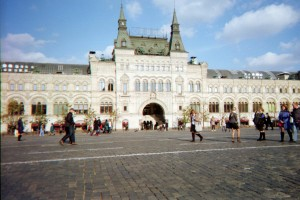
GUM Shopping Complex, Red Square, Moscow
(Photo by Natylie S. Baldwin)
(Photo by Natylie S. Baldwin)
The sense I got from the Russians whom I spoke with was that they’d weather this storm and come out stronger and wiser for it – as they’d had to do in far worse conditions in their history. In spite of the recession, people generally looked healthy, were dressed in Western attire, and young people had their smartphones. In many ways, these people looked indistinguishable from those you’d see in any American city or suburb.
Prior to this economic downturn, Russia had enjoyedconsistent increases in quality of life after “the lost weekend” of massive poverty, crime and exploding mortality rates that the Russian people had suffered during the Yeltsin years – giving Boris Yeltsin the distinction of being the least popular leader among Russians of the last 100 years.
As Victor Kramarenko, an engineer and foreign trade relations specialist during the Soviet period and, more recently, a years-long executive with a major American corporation in Moscow, summed up the Yeltsin era: “The Russian economy was devastated. We went from being an industrial power that defeated the Nazis, showed resilience, rebuilt quickly, and had great achievements in aviation and space to a place where morale collapsed and a lack of trust and a pirate mentality emerged.”
Why Is Putin Popular?
The devastation of the Yeltsin era was the state of the nation when Vladimir Putin took the helm in 2000. Having to navigate among ruthless oligarchic clans that Yeltsin had left behind, with no political party to support him and a very real possibility of overthrow or assassination if he wasn’t careful, Putin began to surround himself with people he’d trusted throughout his career. This included, among others, some people from the security services.
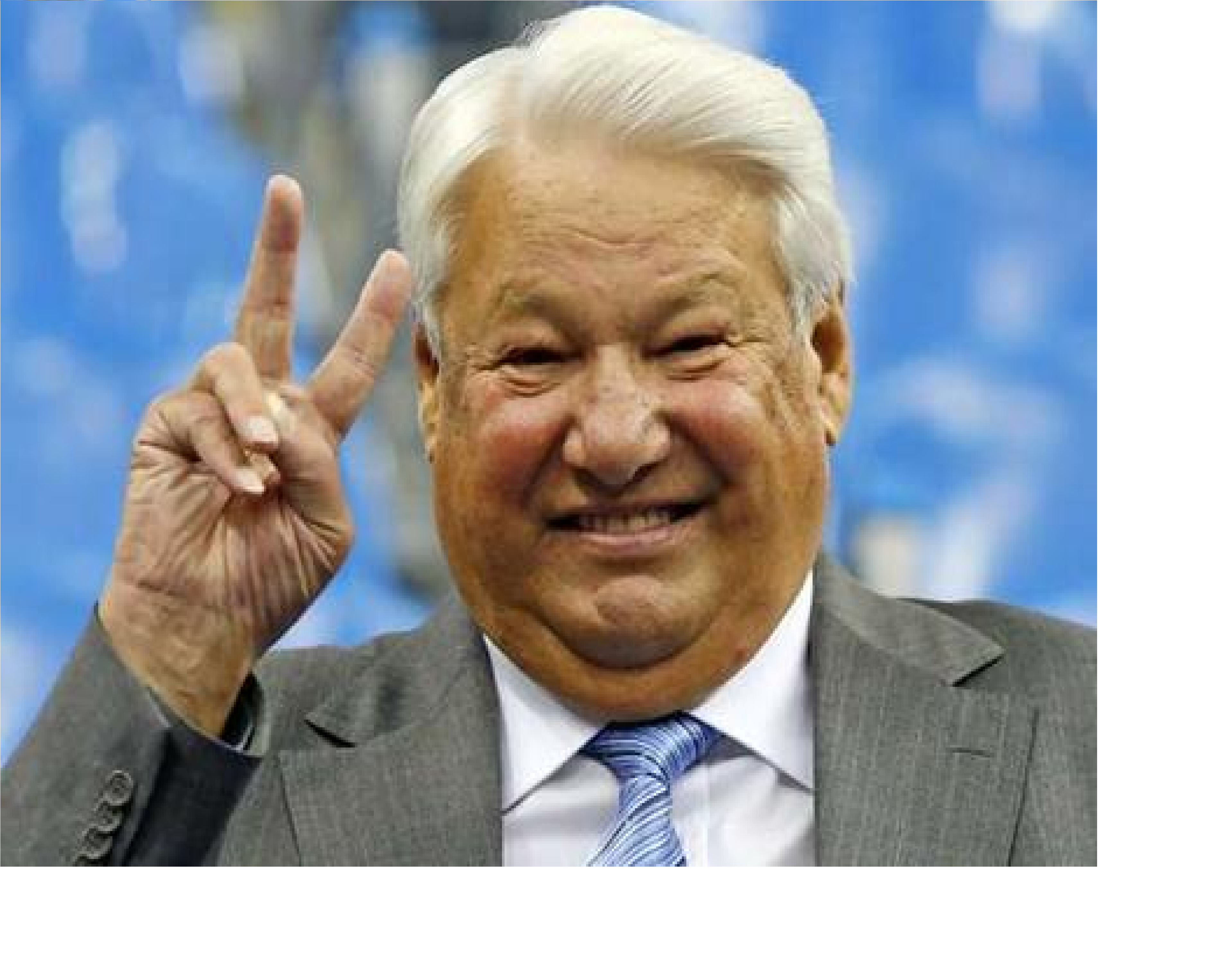
Russian President Boris Yeltsin.
As for the epithet that “once a KGB man, always a KGB man,” Putin was actually not some James Bond-style assassin during his time with the spy agency. He served as a mid-level analyst in Dresden for the bulk of his career. Upon his return to Moscow from East Germany in 1990, he turned down a promotion to the agency’s foreign intelligence operations division, opting to re-settle his family in St. Petersburg instead. His increasing dissatisfaction eventually led him to resign from the KGB.
Putin then went to work as a foreign affairs adviser to Anatoly Sobchack in May of 1990. Sobchak, a professor of economic law at Leningrad State University, had emerged in the Gorbachev era as a popular democratic reformer and major critic of the KGB’s abuses. He had just been elected Chairman of the Leningrad City Council.
The following year Sobchak became mayor and appointed Putin as his deputy. According to Allen C. Lynch in his scholarly 2011 political biography, Vladimir Putin and Russian Statecraft, in this position, Putin coordinated relations with the military, police, district attorney, customs officials and NGO’s and handled diplomatic matters.
In the six years he served in this capacity, Putin had many impressive achievements, including attracting several Western corporations to the city, signing thousands of joint ventures with foreign companies, establishing a substantial foreign banking presence, legalizing the sale of land, allowing for free privatization of residential property, opening an international trade center, and strengthening municipal banks – which contributed to their remaining solvent in the face of the 1998 financial meltdown.
During the 1991 attempted coup against Soviet President Mikhail Gorbachev, Putin found out that the Leningrad KGB, which supported the coup, planned to arrest Sobchak when he returned to the airport from out of town. Putin quickly gathered a group of trusted men and rode straight up to the plane to protect his boss, a challenge the local KGB chose not to press.
The Corruption Claims
Despite Western assertions of Putin’s corruption, with questionable evidence to support these charges, there is evidence pointing in a very different direction about Putin’s honesty. Sharon Tennison – author, program developer and my travel companion in the country – personally interacted with Putin when he reviewed a program proposal for her at Marienskii City Hall in 1992. Although, it was impossible to know who he would go on to become, Putin made an impression on her at the time as the only Soviet/Russian official in her experience who had not asked for a bribe or favor.
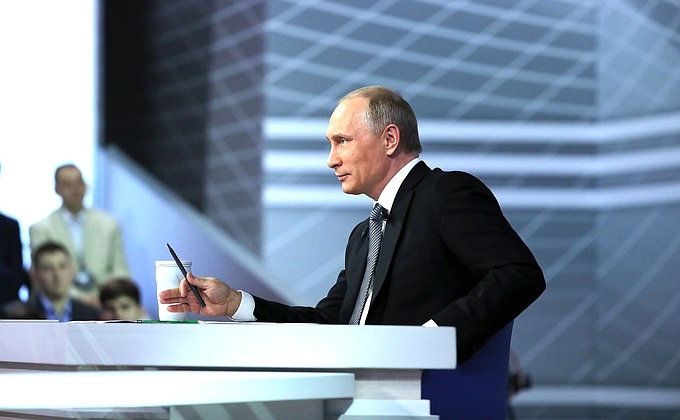
Russian President Vladimir Putin answering questions from Russian citizens at his annual Q&A event on April 14, 2016. (Russian government photo)
Tennison also developed extensive contacts with young entrepreneurs throughout the country, including in the St. Petersburg area. Several of these entrepreneurs stated that Putin was the only local bureaucrat who had never charged a bribe for registering their businesses.
This general picture of Putin’s honesty is buttressed by biographer Lynch as he addresses Putin’s time as deputy mayor of St. Petersburg, stating:
“For much of this time, given Sobchak’s frequent and protracted absences and his preoccupation with national affairs, Putin assumed the functions of acting mayor. He supervised the drafting and implementation of countless international business deals and policy reforms. These transactions did not always go according to plan, and no doubt many profited handsomely from Putin’s admitted inexperience in these matters.
“During his attempt to establish municipal oversight over a series of casinos, for example, the city was cheated. In another case, the city was fleeced for $120 million for two shipments of cooking oil. Although during this period his mother bought a choice apartment at an exceptionally low price at a city auction, Putin didn’t seem to enrich himself personally. In the one specific public charge of corruption that was brought against him, Putin sued in court for slander and won.”
Lynch sums up Putin’s character as follows: “Putin was not corrupt, at least in the conventional, venal sense. His modest and frankly unfashionable attire bespoke a seeming indifference to personal luxury.…Putin was honest, certainly by Russian standards. He lived simply and worked diligently.” (Lynch, pp. 32-33)
Richard Sakwa, a British scholar specializing in Russia, has written perhaps the most comprehensive politicalbiography of Putin, covering all three of his presidential terms and how the Russian political system has evolved under his watch, both the positive and the negative. Sakwa interviewed numerous people who have worked with Putin throughout his career, including many who vouched for his honesty and relative sense of decency when handling political reassignments and other delicate internal matters.
Under Putin’s leadership as either president or prime minister from 2000 to 2012, Russian citizens saw incomes increase five-fold, the poverty rate cut in half, consistent economic growth, and a safer country. Moreover, Russians enjoy universal health care, one of the highest rates of education in the world (54 percent of Russians have a college degree), and 140 days of paid maternity leave for women. And despite the misinformation regularly put out by Washington, including by President Barack Obama himself, Russia’s average life expectancy is now 71 and has been increasing consistently for several years, rebounding from a stunning decline during the Yeltsin years.
Gradual Improvement
Tennison, who lives part-time in St. Petersburg, has been traveling throughout Russia since 1983, when it was still part of the Soviet Union, and has established a wide network of relationships and connections over three decades. He made the following observations in 2014 on the changes she has seen in Russia since 2000:
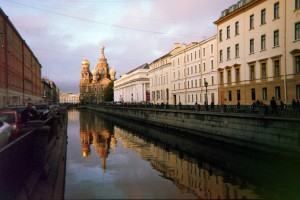
Church on Spilled Blood, St. Petersburg
(Photo by Natylie S. Baldwin)
(Photo by Natylie S. Baldwin)
“During this time, I’ve traveled throughout Russia several times every year, and have watched the country slowly change under Putin’s watch. Taxes were lowered, inflation lessened, and laws slowly put into place. Schools and hospitals began improving. Small businesses were growing, agriculture was showing improvement, and stores were becoming stocked with food.
“Highways were being laid across the country, new rails and modern trains appeared even in far out places, and the banking industry was becoming dependable. Russia was beginning to look like a decent country — certainly not where Russians hoped it to be long term, but improving incrementally for the first time in their memories.”
She goes on to describe similar developments further out from the major cities, including in the Urals, Yekaterinburg, Chelyabinsk and Perm. New museums, municipal buildings and supermarkets, well-maintained streets, modern street lights and regular snow plowing in the winter were all observed.
During this period, Russia also became a creditor nation with relatively low foreign debt, substantial foreign and gold reserves, and a rainy day fund built up during the prosperous years. These are some of the reasons why Putin has consistently had approval ratings between 60 percent and his high of 89 percent in late 2015.
The vast majority of Russians credit Putin with taking a nation that was on the verge of being a failed state, turning it around and creating concrete improvements in their lives. In my many conversations, Russians described him as a leader possessing patience, organization and determination. Overall, they believe his good qualities outweigh his flaws.
Russians also expressed support for his handling of foreign affairs. More specifically, they see him as standing up to numerous provocations from the U.S. and its NATO club.
Russian Interests
Putin is first and foremost a Russian patriot and pragmatist whose priorities, in addition to raising Russians’ living standards, are the security and stability of the country.
Russia has a long history of invasions from all directions due to its lack of natural barriers like oceans and mountain ranges. In the Twentieth Century, it was invaded twice within a 25-year period by Germany. Some 27 million Soviet citizens, including 19 million civilians, perished in fighting off the Nazi Wehrmacht, leaving one-third of their country destroyed. By comparison, the U.S. lost approximately 405,000 and suffered no fighting or damage on its homeland. With this background, Soviet leader Gorbachev was understandably hesitant to allow a reunified Germany into NATO at the close of the Cold War.
By the time of the Malta meeting between Gorbachev and George H.W. Bush in December of 1989, the Berlin Wall had fallen and Washington had promised it would not “take advantage” of Gorbachev’s decision to eschew using force to maintain control of Central/Eastern Europe. Two months later, Bush’s Secretary of State, James Baker, negotiated a gentleman’s agreement with Gorbachev that, in exchange for allowing a reunified Germany as a NATO member, NATO would not expand “one inch to the east.”
Baker’s argument was that NATO membership would have a restraining influence on a unified Germany as opposed to a militarily independent state. According to Viktor Kuvaldin, an adviser to Gorbachev at the time, the Soviet leader did not press for the agreement in writing because he trusted Washington to abide by its promise.
Research by academic Mary Sarotte, published in the Diplomatic History Journal in 2010, which included interviews with participants and review of notes and other documentation from the meetings, indicates that American politicians’ subsequent denials that such an agreement was made are disingenuous. A November 2009investigation by the German news magazine Der Spiegel came to the same conclusion.
After the Cold War, France and Germany believed that the best way to bring Russia into the Western fold and encourage its evolution as a democracy was through cooperation and gradual integration. But the U.S., which saw an intense lobbying campaign by the military-industrial complex and political pandering to certain constituencies, soon began pushing for NATO expansion as well as imposing neoliberal economic reforms, i.e., privatization of the economy and shrinking of the social safety net. Both policies were carried out under the pretext of spreading democracy and both have elicited strong resentment in Russia.
Overtures to the West
During Putin’s first two terms as president, he made overtures to the U.S. and NATO in the hopes of some reciprocity and acknowledgment of Russia’s interests. For example, after the 9/11 attacks, Putin was the first world leader to call President George W. Bush to offer his condolences and support. His reasoning was two-fold: one, he saw the U.S. and Russia as having a mutual interest in fighting Islamist terrorism; second, he knew that he had a tall order in successfully addressing the many profound problems facing Russia at the time.
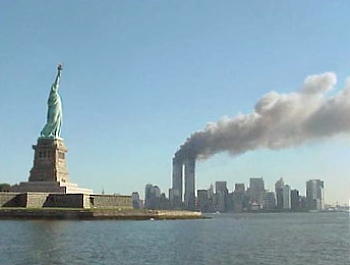
The World Trade Center’s Twin Towers burning on 9/11. (Photo credit: National Park Service)
He would need to put as much time, energy and resources as he could muster into the project of rehabilitating his country, which meant not wasting them on unnecessary conflict with the world’s lone superpower. Going against the advice of most of his security team, he provided logistical and intelligence support as well as access to military bases on behalf of the U.S. operation in Afghanistan.
In return for this assistance, Putin received the equivalent of a swift kick in the shins from the neoconservative Bush administration in the form of a unilateral withdrawal from the Anti-Ballistic Missile Treaty to pursue a “missile defense shield” in 2002 and the accession of seven more nations of Eastern Europe into NATO in 2004. (Three others — Poland, Hungary and the Czech Republic — had joined in 1999)
Seemingly undeterred, in 2008, Putin ordered the Russian Foreign Ministry to draft a proposal that Dmitry Medvedev took to Brussels, outlining a security plan that would cover all of the Euro-Atlantic community and Russia, obviating the need for NATO’s continued existence, much less its expansion.
The preamble stated that: “the use of force or the threat of force against the territorial integrity or political independence of any state, or in any other way inconsistent with the goals and principles of the Charter of the United Nations is inadmissible in their mutual relations, as well as international relations in general.”
It also reiterated the intent to cooperatively address any security concerns that may arise among members. The body of the document contains mechanisms for how concerns or breaches of security could be handled. This proposal was sent to the leaders of relevant nations as well as the heads of European Union, NATO and Organization for Security and Cooperation in Europe, emphasizing that Russia was open to suggestions and negotiation on the plan.
Putin and Medvedev heard crickets in response to their proposal.
Ratcheting Up Tensions
Not long afterward, Georgian leader Mikheil Saakashvili, egged on by elements in Washington, staged a military incursion into South Ossetia, killing Russian peacekeepers and prompting a strong military response by Russia. The 2009 E.U. fact-finding report on the war between Georgia and Russia does not support the insistence by Washington and the corporate media that Russia started the war.
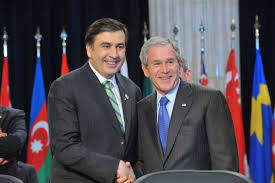
Mikheil Saakashvili, President of Georgia and U.S. President George Bush at a NATO meeting. (Photo credit: NATO)
Five years later, Ukraine, a country where the southeastern area had historically been part of the Russian Empire and the central and western areas part of the Austro-Hungarian Empire, became the flashpoint. The E.U., led by Germany, recklessly tried to pressure Ukrainian President Viktor Yanukovich to sign an Association Agreement that contained terms that would be unwise for the leader of an already poor and divided nation on Russia’s border to agree to. These included requirements that would result in major economic losses and a security clause that implied integration with NATO.
Again, elements from Washington engaged in provocations. A leaked phone call between Assistant Secretary of State for European and Eurasian Affairs Victoria Nuland (a neoconservative from the Bush years whose rise at the State Department was facilitated by Secretary of State Hillary Clinton) and U.S. Ambassador Geoffrey Pyatt revealed them discussing who would take over Ukraine’s leadership several weeks before Yanukovich was illegally overthrown in a violent putsch on Feb. 22, 2014. Footage of Nuland handing out pastries to the protesters also surfaced.
Contrary to repeated claims by the West that the violence on the Maidan, especially sniper fire that killed both police and protesters on Feb. 20, 2014, was the result of Yanukovich’s forces or even Russian provocateurs, several credible sources indicate that neo-fascist forces, such as Svoboda and Right Sector, had hijacked the Maidan movement and were the responsible parties.
The first source is Estonian Foreign Minister Urmas Paet during an intercepted phone conversation dated Feb. 26, 2014 in which he reports to then-E.U. High Commissioner Catherine Ashton that his on-the-ground sources told him:
“What was quite disturbing, the same oligarch told that well, all the evidence shows that the people who were killed by snipers from both sides, among policemen and people from the streets that they were the same snipers, killing people from both sides. … So that and then she [Dr. Olga Bolgomets] also showed me some photos, she said that as medical doctor, she can, you know, say that it’s the same handwriting, the same type of bullets, and it’s really disturbing that now the new coalition they don’t want to investigate what exactly happened, so that now there is stronger and stronger understanding that behind the snipers, it was not Yanukovich, but it was somebody from the new coalition.”
This assessment was later supported by an April 2014 investigation by Germany’s ARD TV. An even more in-depth forensic investigation undertaken by Dr. Ivan Katchanovksi, a Canadian academic whose family originally hails from western Ukraine, also concluded that neo-fascist elements of the Maidan movement were culpable.
These extremists had refused to abide by a Feb. 21, 2014 agreement hammered out by Poland, France, Germany and the Yanukovich government in which the latter had agreed to reduced powers and early elections. Interestingly, these European countries have never publicly explained why they abandoned their role as guarantors of the agreement as the violence of Maidan escalated when the putsch occurred the following day.
Considering that none of these three sources can plausibly be accused of being Putin apologists, it casts the West’s whole narrative of “Putin aggression” in a very different light, including the subsequent referendum in Crimea in which 96 percent of the voters favored seceding from Ukraine and rejoining Russia in spring 2014.
View from Crimea
When I visited the three Crimean cities of Simferopol, Yalta and Sevastopol, I had conversations with a cross-section of people, from cab drivers and bus riders to small business owners and participants in what is variously referred to by the locals as “The Crimean Spring” and “The Third Defense of Sevastopol.” I came away with three conclusions.
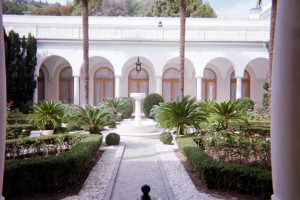
Courtyard where famous photo of Stalin, Churchill
and Roosevelt was taken in 1945, Yalta, Crimea
(Photo by Natylie S. Baldwin)
and Roosevelt was taken in 1945, Yalta, Crimea
(Photo by Natylie S. Baldwin)
The first is that Crimeans, who are mostly ethnic Russians who speak Russian, were genuinely alarmed by the ultra-nationalist rhetoric and violence coming out of Kiev, which resulted in what they viewed as an illegal coup by extremist elements of the Maidan movement, supported by Washington.
As Tatyana, a professional tour guide in Yalta told me: “No one asked us if we wanted to go along with Maidan. There are Russians as well as people who are a mix of Russian and Ukrainian here. We are not against Ukraine as many of us have relatives there, but Maidan was not simply a spontaneous protest. We are aware of the phone call with Victoria Nuland and Geoffrey Pyatt, we saw the photos of her with Yatsenyuk, Tiagnibok [leader of Svoboda, the neo-fascist group that was condemned by the E.U. in 2012], and Klitschko on television. We saw the images of her handing out cookies to the protesters.”
These extremists had attacked ethnic Russians from Crimea who had participated in anti-Maidan protests and the attackers were reportedly on their way into the Crimean peninsula. As a result, Crimeans began to organize self-defense units to protect their communities.
Secondly, Crimeans did not necessarily think Russia would accept their requests for help. Crimea had been part of Russia from the time of Catherine the Great’s reign in the Eighteenth Century. But during the Soviet era, Premier Nikita Khrushchev gifted Crimea to Ukraine.
Since both Russia and Ukraine were part of the Soviet Union at the time, this was not a problem. However, when the Soviet Union dissolved in 1991, Crimea remained in Ukraine as an autonomous region, while the naval base at Sevastopol was retained by Russia via a lease with the Kiev government. Between 1991 and 2013, Crimeans had voted several times to be reunited with Russia, only to have their requests ignored.
Putin, as any Russian leader would have, viewed the events of February 2014 as a threat to Russia’s naval base and only warm water port. Knowing that the Crimean population had repeatedly expressed its desire to be part of Russia, Putin decided on an operation to assist the native Crimeans in blocking both marauding ultra-nationalists and representatives of the coup government from interfering in activities that would facilitate Crimea’s quick reintegration into Russia.
Support for Reunification
Crimeans told me that they knew the so-called “little green men” were Russian soldiers legally stationed at the naval base who had donned unmarked uniforms. They also told me that they viewed them as protectors who allowed them to peacefully conduct their referendum, not as invaders. Suggestions that these Russian soldiers had pressured them to vote at gunpoint were dismissed as ridiculous.
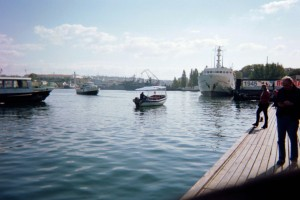
Dock at Naval Base in Sevastopol, Crimea
(Photo by Natylie S. Baldwin)
(Photo by Natylie S. Baldwin)
Third, Crimeans were very happy to be part of Russia. Though they acknowledged that there was still a lot of work to be done, they viewed the future with hope. Thesesentiments have been borne out in several Western opinion polls (Gallup, Pew, GfK, and Levada-Open Democracy) over the past two years.
When the topic of sanctions came up during a meeting with small business professionals in Simferopol, one of them stated, “We are suffering under the sanctions, but the sanctions will not make us go back to where we don’t want to be. There are still many Crimeans willing to fight if it were to become necessary.”
In a similar vein, one participant in the self-defense forces of Sevastopol, Nicolai Kachin, told me: “Sevastopol was the first city to rise up in Crimea. If residents hadn’t stood up to defend themselves, war would be raging in Crimea worse than in the Donbass.”
The Donbass is a region of southeastern Ukraine where Russian speakers had similar concerns. The West has typically characterized the Donbass rebels as puppets of Russia with no legitimate grievances or indigenous support. However, American Russia scholar Nicolai Petro, who spent a year in Ukraine and was in country when the upheaval occurred, has cited sociological surveys of Donbass residents from March, April and May of 2014 in which the results show that majorities considered the Right Sector to be dangerous and influential and the Maidan protests to be illegal and representing “an armed overthrow of the government, organized by the opposition, with the assistance of the West.”
Kiev’s subsequent decision to start an “anti-terrorist operation” against the Donbass region, instead of negotiating a resolution, has only hardened the view of Crimeans that their reunification with Russia was correct and saved them from a similar fate.
Alternative Approaches
One is left to wonder if this could have all been avoided if the West had engaged Russia in good faith on its proposal for a pan-western security architecture in 2008, instead of pushing what amounts to a very dangerous zero-sum game in Russia’s backyard. Attempts to press for the eventual inclusion of Ukraine (and Georgia) into NATO have been ongoing since at least the George W. Bush administration when Condoleezza Rice had aheated discussion with Putin about it during a meeting in 2006.
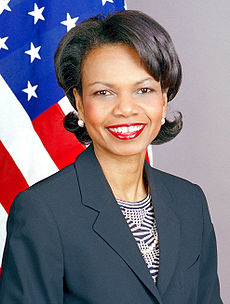
Ex-Secretary of State Condoleezza Rice
When Rice tried to assert that each country had the right to decide for itself which alliances to join, Putin explained that Ukraine had many ethnic and political divisions and that such a move could create instability in the country. Polling had reflected that the majority of Ukrainians at the time did not favor joining NATO. This, of course, was in addition to the fact that having a hostile military alliance right on its Western border was understandably perceived as a national security threat to Russia.
These points were reiterated in a conversation between Russian Foreign Minister Sergei Lavrov and then-Ambassador to Russia William Burns as reflected in a confidential cable to Washington from February 2008 titled “Nyet Means Nyet: Russia’s NATO Enlargement Red Lines.”
In the cable, Burns states that Russia warned that pushing Ukraine into NATO could provoke a civil war and that Russia would consequently have to decide whether to intervene or not – a decision Lavrov emphasized Russia did not want to be faced with.
At a minimum, Washington needs to recognize what America’s preeminent Russia expert, Stephen F. Cohen, has noted. That is that we need a pragmatic partnership with Russia if we are to have any hope of addressing the most pressing challenges facing humanity: nuclear disarmament, catastrophic climate change, terrorism and global inequalities that have become destabilizing.
If one studies Putin’s speeches, along with major interviews, which are available in good English translations on the Kremlin website, one can deduce that Putin is an intelligent and rational actor who could be a partner to Washington in areas of mutual interest – as he has indeed demonstrated with respect to eliminating the Syrian government’s chemical weapons and assisting in the Iran nuclear deal.
Putin has been clear and consistent for years that he requires Russia’s interests to be taken into account, including its security. And this is as it should be. He was elected to represent and pursue Russia’s interests, not to serve Washington if he gets nothing in return. Unfortunately, Western corporate media routinely quotes Putin out of context or pretends that it is impossible to understand him because of their cartoonish characterization of him as a “thug.”
Challenges for Russia
Corruption
Corruption has been an intractable problem for centuries in Russia since the administrative state and its attendant tribute paying and harsh bureaucracy were established by the Mongols in the Thirteen Century.

Thoroughfare for pedestrians in downtown Krasnodar
(Photo by Natylie S. Baldwin)
(Photo by Natylie S. Baldwin)
Indeed, it is one of the major issues Putin has publicly admitted he has failed so far to adequately resolve. Although there has been some progress as is reflected in Russia’s rapid rise in the World Bank’s Ease of Doing Business scores and the Coopers Waterhouse findings for 2016 that Russia has reduced economic crime by 12 percent in the last two years, it is recognized by both Putin and the Russian public that substantially more needs to be done.
Political and Civil Rights
Russians can travel freely as long as they can afford it. Orthodox Christians, Muslims, Jews and Buddhists are generally free to worship as they please. There is little overt censorship and all the Russians I spoke to said they had access to Western media through both satellite and the Internet, although they all found it to be very distorted and inaccurate in its portrayal of their country and their leader. There is a variety of opinion represented in print media, and even on pro-government Russian TV it is not unusual for a pro-Western viewpoint to be included on political talk shows.
There is still considerable room for improvement for journalists in Russia. However, according to the Committee to Protect Journalists, deaths of journalists have actually gone down in the Putin era of governance compared to the Yeltsin era. One would be hard-pressed to know that judging by the way Western politicians and media have undertaken an over-the-top vilification campaign against Putin but gushed that Yeltsin was a “democrat.”
As for the fate of Anna Politkovskaya, the idea that Putin was behind her murder has been promiscuously bandied about in the West, but no evidence has ever been presented. Moreover, her employers at Novaya Gazeta believe the Chechen leadership was behind her death, not the Russian government. Those who carried out the murder have been convicted in Russian court and are now in prison, but it is troubling that whoever ordered it remains at large.
Civil society development has had a setback with the foreign agents law. While some civil society activists whom Ispoke to acknowledged that Western provocateurs were a problem, there were many authentic NGO’s that were being caught in the dragnet and the law is consequently viewed among them as a mistake that needs to be rectified. The Russian population in general is divided on this legislation. In response to some of the criticism, in May of this year, the Duma amended the law to exclude charities and cultural organizations.
There have still been some openings for modest civil society development. For example, an independent organization of citizens called the Public Council has developed since 2014 in the city of Krasnodar. It has successfully worked to get the local authorities to start taking the needs and desires of citizens into account when making decisions and enacting policies.
Among other things, they have stopped the destruction of old trees, buildings and parks as well as networked with youth groups and infrastructure specialists, including foreign experts in urban planning, public arts, transportation and city marketing. They have organized periodic cleanup and renovation days sponsored by local businesses that donate equipment, and are working to connect the city’s hiking trails and protect its 16 lakes.
Not only have they received no opposition from Russian authorities, they have begun to gain positive recognition as well as interest from other Russian cities looking to replicate their model.
Another example is a civic education program to teach democracy skills to Russians designed by an independent American named Charles Heberle. The program has been under implementation in a province near St. Petersburg and has had the quiet backing of the Putin government since the early 2000’s.
As the French and Germans wisely recognized at the end of the Cold War, it would serve the goal of encouraging Russia’s evolution toward more openness and democracy if their deep and historical fears of hostility, invasion and exploitation are not provoked. If given the time and space, without U.S. meddling, Russia will address its own internal problems and evolve into a system that will reflect its unique geography, culture and political history.

